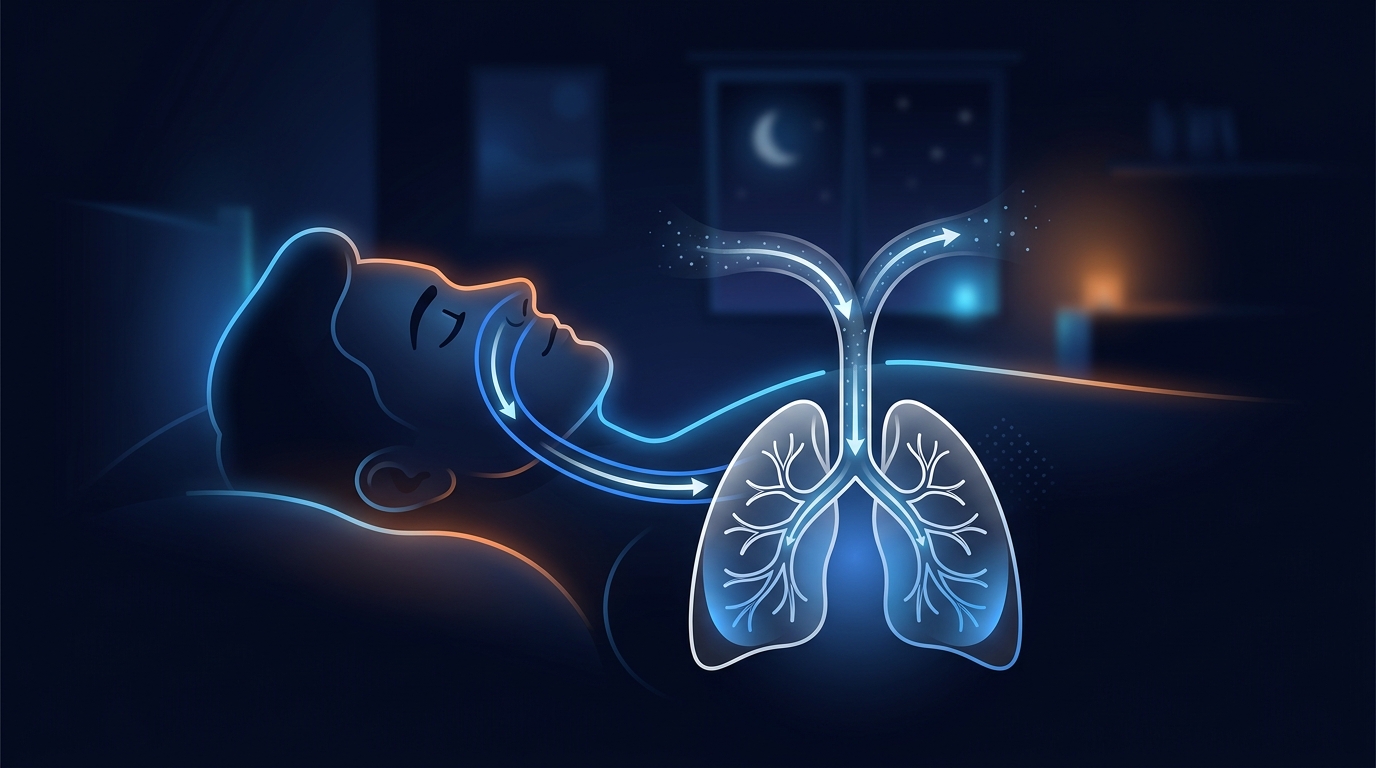
Snoring may not just be a simple "sleeping habit." Chronic snoring reduces sleep quality and, in severe cases, can be a warning sign of a serious sleep disorder called sleep apnea. Understanding the geometric and physiological principles behind snoring and finding the right treatment based on the cause is the first step toward optimal sleep health.
1. Why Do We Snore?
Many believe snoring is purely a problem inside the nose, but the true origin of the sound is actually further down. It occurs when the air passage inside the throat, known as the upper airway, narrows while we sleep.
As air is forced through this constricted space, the surrounding soft tissues (soft palate, base of the tongue, uvula, etc.) vibrate rapidly, producing the friction sound we recognize as snoring.
🔬 Airway Mechanics: Normal Airway vs Snoring Airway
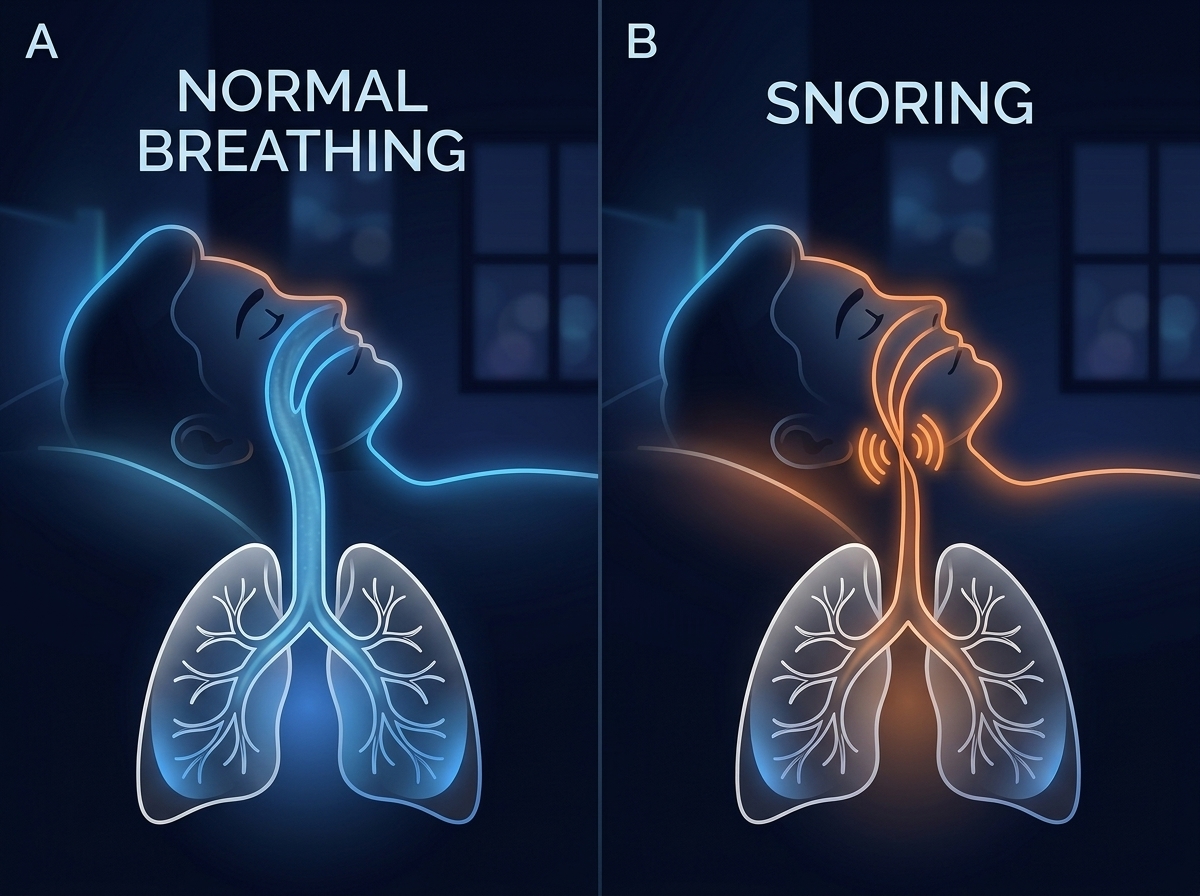
A (Normal Breathing): The airway is wide open, allowing air to pass smoothly without resistance.
B (Snoring Breathing): The airway narrows, causing surrounding tissues to vibrate intensely and create noise.
2. Why Does the Airway Narrow? (Main Causes of Snoring)
Here are the 6 primary physical and physiological factors that narrow the airway during sleep:
Obesity
Excess fat accumulates around the neck, physically compressing the airway.
Alcohol & Sedatives
Over-relaxes the throat muscles, causing the airway to collapse during sleep.
Sleeping Position
Sleeping flat on your back pulls the tongue and soft palate down due to gravity.
Nasal Congestion
Obstructed nasal breathing forces mouth breathing, which destabilizes the throat.
Enlarged Tonsils
Enlarged tonsils or adenoids physically obstruct the airway entrance.
Tongue/Jaw Structure
A naturally large tongue or a recessed lower jaw easily blocks the throat space.
3. Solutions by Cause
Treatment should target the specific anatomical or physiological origin of the snoring:
| Cause | Physiological Description | Management & Solutions | Expected Results |
|---|---|---|---|
| Obesity | Fat tissue deposits inside and around the throat narrow the airway. | Gradual weight loss (5–10% reduction can show improvement) | Reduces compression, alleviates snoring |
| Alcohol/Sedatives | Depresses the central nervous system, reducing pharyngeal muscle tone. | Avoid alcohol or sedatives 3–4 hours before bed | Maintains muscle tone, reduces vibration sound |
| Back Sleeping | Gravity pulls the tongue base and soft palate backward. | Sleep on your side; use body pillows for support | Prevents airway blockage by keeping tongue forward |
| Congestion/Rhinitis | High resistance in nasal passages forces mouth breathing. | Nasal sprays, saline rinses, bedroom humidification | Restores quiet and natural nasal breathing |
| Enlarged Tonsils | Hypertrophied tissue physically blocks the upper airway. | ENT clinical evaluation; tonsillectomy if indicated | Widens the airway, curing the structural cause |
| Jaw/Tongue Shape | Mechanical blockage due to jaw recession or macroglossia. | Mandibular advancement devices (MAD), jaw surgery (if severe) | Pulls lower jaw forward, opening throat space |
| Extreme Fatigue | Deep sleep rebound increases overall muscle relaxation. | Maintain a consistent sleep schedule and rest enough | Stabilizes muscle tone, reducing early-night snoring |
4. When to Consult a Sleep Specialist
Pathological snoring carries risks of cardiovascular complications. Check for these warning signs:
- The snoring is extremely loud, clearly audible through closed doors.
- Witnessed pauses in breathing, choking, or gasping during the night.
- Waking up with a very dry mouth or a morning headache.
- Unusual daytime fatigue, brain fog, or falling asleep during activities.
- Underlying high blood pressure, heart disease, or type 2 diabetes.
5. Snoring as a Warning Sign of Sleep Apnea
Untreated loud snoring is highly correlated with obstructive sleep apnea (OSA). OSA is a dangerous medical state where the airway completely collapses during sleep, repeatedly stopping oxygen supply to the brain and heart.
Over time, this chronic oxygen deprivation severely damages blood vessels, dramatically increasing the risk of heart attacks, stroke, and arrhythmias. You should undergo a clinical polysomnography (PSG) sleep study for proper diagnosis and treatments like CPAP therapy.
🔬 SleepLab2 Conclusion
Snoring is not just an annoying noise; it is a desperate SOS signal from your body indicating oxygen deprivation. Diagnosing the underlying physical causes, seeking clinical care when needed, and adjusting lifestyle habits are key to reclaiming restorative sleep. Healthy sleep is the most powerful, natural, non-pharmacological treatment for quality of life.
📚 References & Scientific Literature
- Korean Society of Otorhinolaryngology-Head and Neck Surgery - Snoring Management Guidelines.
- American Academy of Sleep Medicine (AASM) - Clinical Practice Guideline for the Treatment of Intrinsic Sleep Disorders.
- Mayo Clinic - Snoring: Causes, Symptoms, and Clinical Diagnosis.
- UpToDate - Pathophysiology and Treatment Alternatives of Obstructive Sleep Apnea in Adults.