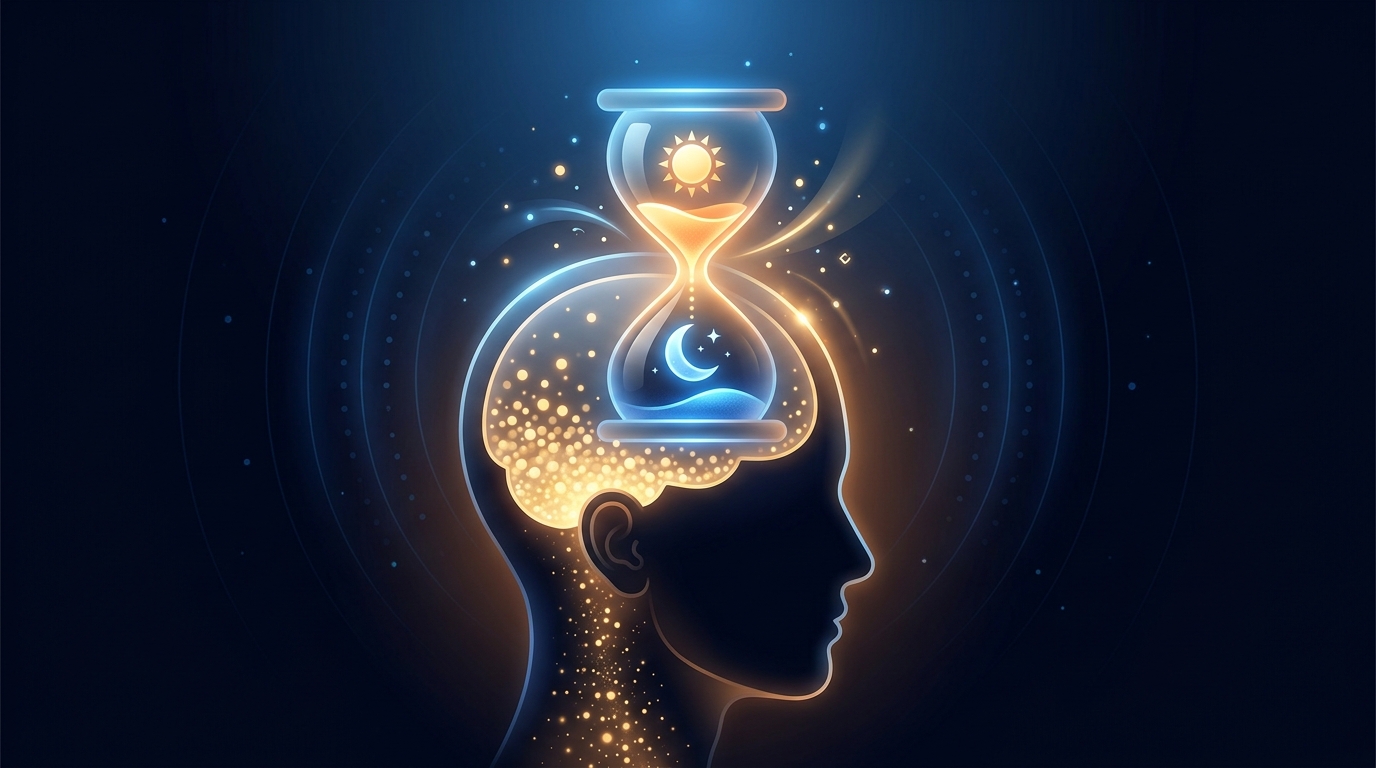
"I just want to get a good night's sleep."
This is probably the most common request among sleep-related concerns. On the internet, standard tips for sleeping well are frequently introduced, such as:
- Drinking warm milk
- Meditation
- Exercise
- Avoiding smartphones
- Smelling lavender scents
While these methods can offer minor physiological support, many people still struggle to sleep even after practicing them. Why is that?
The reason is that sleep is not something you force through willpower, but a biological state that occurs naturally when the body is ready.
Sleep is Not Achieved by 'Trying Harder'
Many lie in bed thinking, "I must sleep quickly." However, sleep cannot be forced. In fact, anxious thoughts like the following stimulate the brain:
- I have to sleep now.
- I must wake up early tomorrow.
- What if I can't sleep again tonight?
These worries trigger the sympathetic nervous system, increasing alertness. Sleep is not a forced action; it is a natural physiological process that initiates when the body signals, "It is time to rest."
Core Elements of Healthy Sleep
At SleepLab2, we view sleep through the lens of **circadian biology** rather than just a set of routine habits. To sleep well scientifically, you must manage four key variables:
1. Consistency of the Circadian Rhythm
Our body operates on a biological clock with a roughly 24-hour cycle. When sleep and wake times shift dramatically, the brain struggles to predict when to release sleep hormones. Keeping a regular schedule aligns your biological clock, causing you to feel naturally sleepy at the right time.
2. Accumulating Sufficient Sleep Pressure
Sleep does not simply arrive because it is nighttime. As you stay awake, a compound called Adenosine builds up in the brain. This is known as Sleep Pressure. You need adequate sleep pressure to trigger deep sleep. Taking long naps or lying in bed all day prevents adenosine from building up, making it harder to sleep at night.
3. Minimizing Light Exposure at Night
Our circadian system is highly sensitive to light entering the eyes. Blue light from smartphones, tablets, and bright ambient lighting sends a strong signal to the brain: "It is still daytime." This suppresses the sleep hormone melatonin and delays the biological clock, making it harder to feel sleepy.
4. Resting the Body Instead of Forcing Sleep
If you cannot sleep, instead of worrying about why, tell yourself: "Even if I don't sleep, I will close my eyes and let my body rest." Keeping the bedroom dark and quiet while shifting focus to simple physical rest relaxes the nervous system, allowing a smooth transition into sleep.
The Scientifically Proven Biological Clock
The 2017 Nobel Prize in Physiology or Medicine was awarded to researchers who identified the molecular mechanisms controlling the circadian rhythm. They proved that an autonomous biological clock operates within us, regulating sleep cycles, hormone release, and body temperature. This shows that sleep is controlled by deep biological systems, not willpower.
🔬 SleepLab2 Conclusion
Sleeping well is not about forcing sleep. Instead, keep a consistent schedule, stay active during the day to build sleep pressure, and minimize evening light. Sleep is a biological gift that arrives through harmony, not sheer effort. SleepLab2 helps you restore healthy circadian balance.
📚 References & Scientific Literature
- 2017 Nobel Prize in Physiology or Medicine – Discoveries of molecular mechanisms controlling the circadian rhythm.
- National Institute of General Medical Sciences (NIGMS) – Circadian Rhythms Fact Sheet.
- Harvard Medical School Division of Sleep Medicine – Sleep, Circadian Rhythms and Light Exposure.
- American Academy of Sleep Medicine – Healthy Sleep Habits.
- National Sleep Foundation – Sleep Hygiene Recommendations.