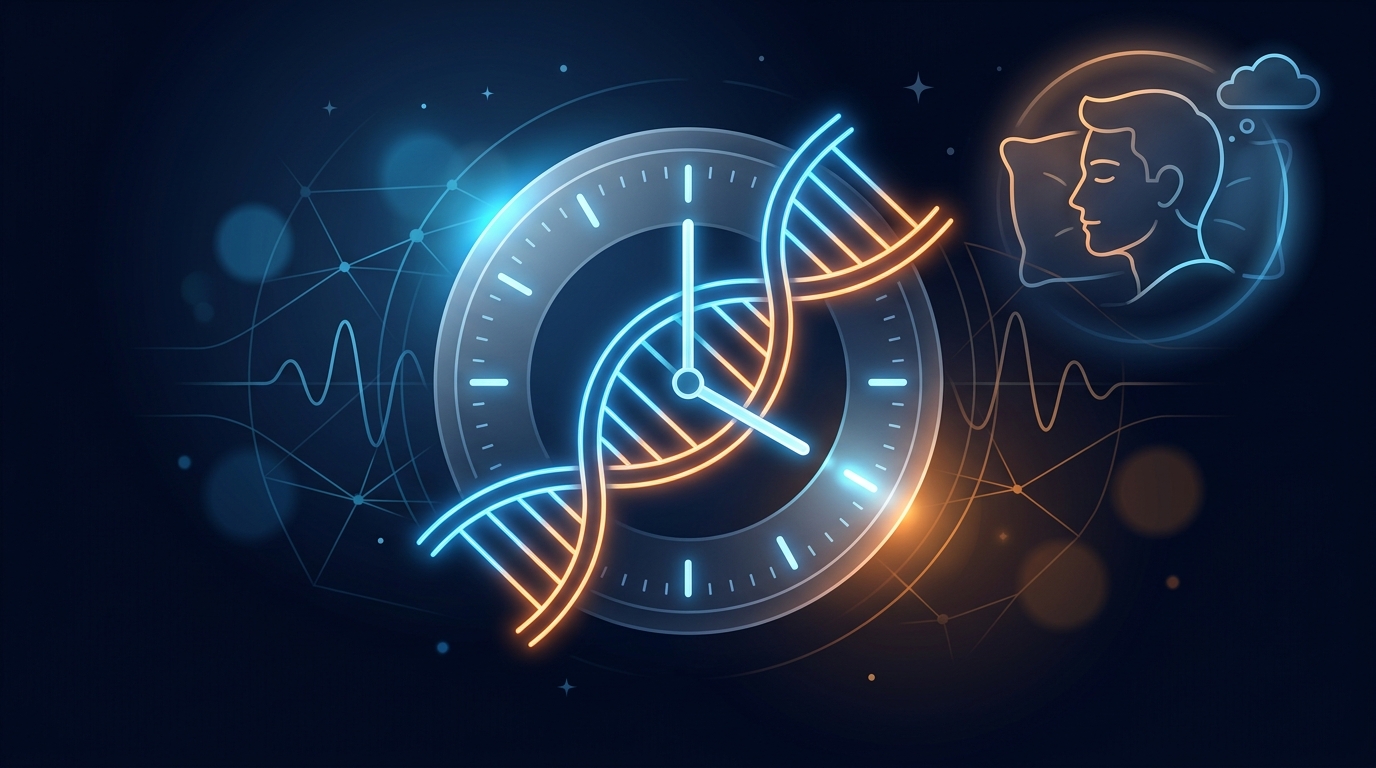
"Thomas Edison slept only 4 hours a day, can I do the same?"
Workers, students, and examinees often wonder at least once: "If I could function on just a little sleep, wouldn't I be able to use my day more efficiently?" Indeed, stories about '4-hour sleep', 'sleeping 5 hours is fine', or 'successful people sleep less' are widely circulated on the internet.
But is it truly healthy to live on 4 hours of sleep? Can you maintain a productive day? While a tiny fraction of the population can, for the vast majority of people, it is far from enough.
Required Sleep Time Varies by Person
Many believe that 8 hours of sleep is the absolute rule. In reality, required sleep times differ slightly from person to person. It is influenced by:
- Age
- Lifestyle Habits
- Health Conditions
- Inherent Genetics
Thus, not everyone has to sleep the exact same number of hours to function optimally.
Some People Truly Thrive on 4 Hours
Though extremely rare, there are individuals who recover fully after only 4 to 6 hours of sleep. They are called Short Sleepers.
Studies indicate that due to specific genetic mutations, some individuals feel minimal fatigue despite sleeping very little. The classic example often cited is inventor Thomas Edison.
However, we cannot conclude that anyone can sleep 4 hours based on these rare cases. Natural short sleepers are a tiny minority; most people do not belong to this category.
Why is 4 Hours Insufficient for Most People?
During sleep, our bodies perform vital restorative functions:
- Consolidating brain memory and information
- Releasing critical hormones
- Repairing tissues
- Regulating immune functions
If sleep is chronically restricted, these processes fail to complete. You might feel fine at first, but sleep debt gradually accumulates in the body.
Recovery Matters More Than Just Hours
At SleepLab2, we emphasize whether your body has fully recovered rather than the raw number of hours. Some people feel tired even after 8 hours, while others wake up refreshed after 7 hours. This is because sleep is influenced by:
- Sleep Quality
- Circadian Clock alignment
- Social Jetlag (misaligned schedule)
- Undiagnosed Sleep Disorders
The Importance of the Circadian Rhythm
Our body operates on a 24-hour biological clock called the Circadian Rhythm. Even with the same 7 hours of sleep, sleeping in alignment with your clock versus sleeping out of sync with it results in entirely different energy levels upon waking.
In short, sleeping at the right time is just as important as sleeping the right amount.
🔬 SleepLab2 Conclusion
Natural short sleepers who function on 4 hours of sleep do exist. However, for most, it will lead to severe sleep debt. The goal is not to copy someone else's schedule, but to check whether your body is recovering and if you are living in sync with your circadian rhythm. SleepLab2 approaches sleep not as a simple time calculation, but through the scientific lens of biological rhythm and recovery.
📚 References & Scientific Literature
- 2017 Nobel Prize in Physiology or Medicine – Discoveries of molecular mechanisms controlling the circadian rhythm.
- National Institute of General Medical Sciences (NIGMS) – Circadian Rhythms Fact Sheet.
- American Academy of Sleep Medicine – Recommended Amount of Sleep.
- National Sleep Foundation – Sleep Duration Recommendations.
- He, Y. et al. – Natural Short Sleep Associated with DEC2 Gene Mutation.