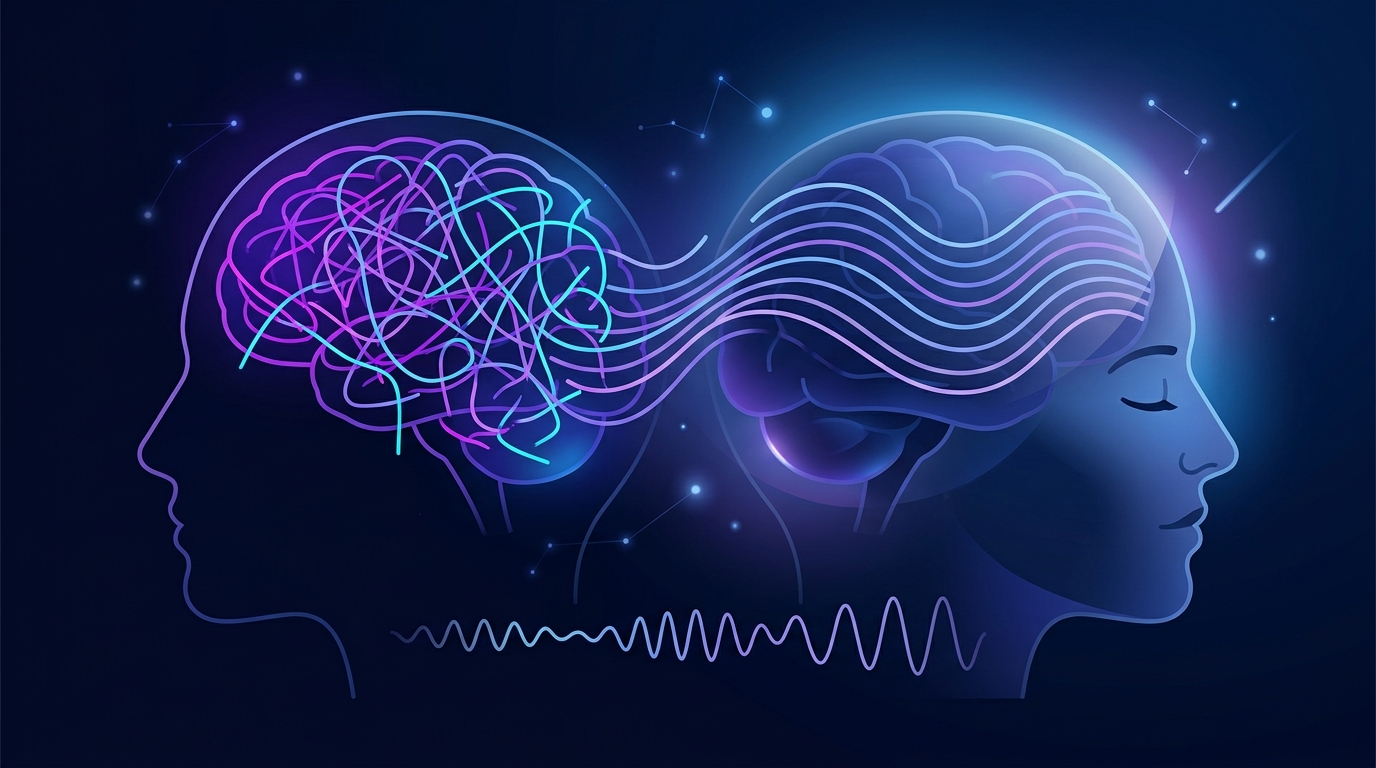
A sleepless night. You toss and turn for hours in bed, barely falling asleep, only to wake up exhausted the next morning to start your day. When this pattern repeats, the first thought that comes to mind is:
"Could I have insomnia?"
However, there is something you should know first. Struggling to sleep doesn't automatically mean you have clinical insomnia. In fact, it is much more common to experience temporary sleeplessness due to lifestyle habits, stress, biological clock shifts, or caffeine consumption. Conversely, medically diagnosed insomnia is not just a delay in falling asleep, but a sleep disorder that requires proper treatment. What exactly is clinical insomnia?
Insomnia is a Far More Serious 'Sleep Disorder'
Many people think of insomnia simply as "having trouble sleeping." However, medically diagnosed insomnia is much more severe. Medical Insomnia involves conditions where:
- You struggle to fall asleep despite adequate sleep pressure.
- You wake up frequently during the night.
- You wake up too early and cannot fall back asleep.
- You feel unrefreshed even after sleeping enough.
When these symptoms persist at least 3 times a week for 3 months or more, and are accompanied during the day by:
- Severe fatigue
- Decreased concentration
- Impaired memory
- Reduced performance at work or school
- Diminished quality of life
In other words, "I couldn't sleep last night" and "I have clinical insomnia" are entirely different concepts.
Not All Sleeplessness is Insomnia
Anyone can have a sleepless night. For example, before an important exam, during highly stressful periods, after drinking coffee late, using smartphones, or when putting off sleep because you want to stretch your day. In these situations, struggling to fall asleep is a natural physiological reaction.
Additionally, for individuals with late circadian clocks (night owls), trying to sleep early because of social schedules means attempting to sleep before the body is ready. In this case, sleeplessness has diverse external causes and is not clinical insomnia.
Do Not Self-Label Yourself with Insomnia
Some people quickly conclude "I have insomnia" after just a few sleepless nights. This label leads to anxiety: "What if I can't sleep tonight?" or "What if I'm exhausted tomorrow?" This worry stimulates the brain, creating an artificial pressure to sleep that actually prevents it.
Indeed, Cognitive Behavioral Therapy for Insomnia (CBT-I), the primary non-drug treatment, focuses heavily on reducing this excessive worry and breaking the self-label of "having insomnia" as a critical therapeutic step.
Review Your Lifestyle Habits First
If you're having trouble sleeping, check the following first:
- Is your sleep and wake schedule consistent every day?
- Are you using smartphones or tablets late at night?
- Did you consume caffeine late in the afternoon or evening?
- Did you take a long nap during the day?
- Are you forcing yourself to sleep when your body isn't ready?
- Have you been under a lot of stress or worry lately?
Simply adjusting these habits and improving your sleep environment can often resolve sleeping difficulties.
When You Should Seek Medical Attention
On the other hand, if you experience the following patterns, do not dismiss them as simple habits. Seek professional medical evaluation:
- Taking a long time to fall asleep consistently.
- Waking up frequently and struggling to fall back asleep.
- Feeling unrefreshed despite sleeping long hours.
- Severe daytime fatigue disrupting daily life.
- Symptoms persisting for several months.
Clinical insomnia is not resolved by willpower or endurance. It is a medical sleep disorder. If symptoms are severe or chronic, consult a specialist early to identify the precise underlying cause.
Circadian Rhythms and Sleep Delays
Our body operates on a 24-hour biological clock called the Circadian Rhythm, which varies by individual. Some feel sleepy at 10 PM, while others do not feel tired until 2 AM. This variation is known as your Chronotype.
If you try to sleep much earlier than your biological clock dictates, the resulting wakefulness is not insomnia; your body is simply not ready.
In fact, the 2017 Nobel Prize in Physiology or Medicine was awarded for discoveries of the molecular mechanisms controlling the circadian rhythm. The researchers proved that biological clocks drive our schedules, providing a genetic basis for different sleep timings. This scientific insight helps us understand that sleeping late is not always a lack of willpower or a disorder.
🔬 SleepLab2 Conclusion
Sleeplessness is not always medical insomnia. It often stems from temporary stress, poor sleep environment, or circadian delay. We recommend checking your habits first. However, if symptoms persist for months, it is a sleep disorder—seek medical advice. SleepLab2 views sleep as a biological harmony.
📚 References & Scientific Literature
- American Academy of Sleep Medicine – Clinical Practice Guideline for Chronic Insomnia.
- American Academy of Sleep Medicine – Cognitive Behavioral Therapy for Insomnia (CBT-I) Protocol.
- National Sleep Foundation – Insomnia Overview & Symptoms.
- National Institute of Neurological Disorders and Stroke (NINDS) – Insomnia Information Page.
- 2017 Nobel Prize in Physiology or Medicine – Discoveries of molecular mechanisms controlling the circadian rhythm.